


Markets have been moving, but they have not been trending.
The chart below shows the broad indices over the past several months. SPY, QQQ, IWM, and DIA have all spent months rotating sideways around their intermediate averages rather than expanding into sustained trends.
This kind of environment creates plenty of movement, but very little follow-through.
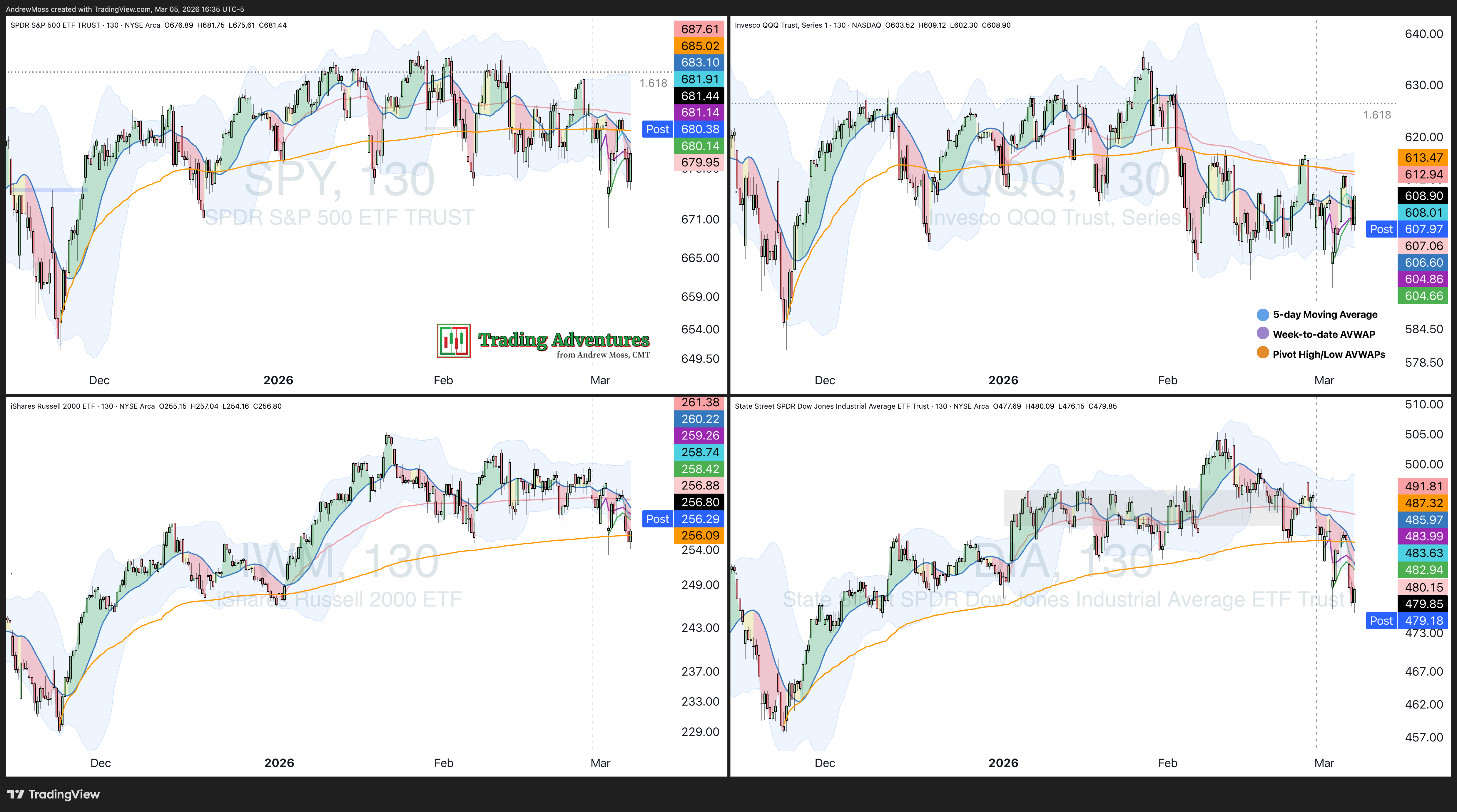
Over the past several weeks we have seen repeated gap opens, intraday rallies, and sudden reversals. Moves begin, stall, and rotate back the other way. It is the kind of environment where activity is easy to find, but sustained direction is harder to capture.
In conditions like this, the temptation is to force trades or increase size in an effort to make something happen.
That is exactly when discipline matters most.
When follow‑through is inconsistent, the edge doesn’t come sizing up or predicting direction. It comes from controlling risk.
That is where position sizing and stop placement become critical.
The Foundation of Position Sizing
One of the most common questions traders ask is how to determine the proper position size for a trade.
The answer is straightforward.
Position size is a function of three variables:
Entry price
Stop price
The amount of portfolio risk you are willing to take
Mathematically, the smaller the gap between entry and stop, the larger position size you can take for the same planned amount of risk.
But this is where many traders go wrong.
Instead of allowing the structure of the trade to determine the stop location, they allow their desired position size to influence where the stop is placed.
That is backwards.
The stop should never be chosen because it allows for a larger position.
The stop should always be placed at the point where the structure of the trade is invalidated.
Once that level is identified, everything else flows from it.
Let the structure define the stop.
Let the stop define the risk.
Let the risk determine the position size.
This simple sequence prevents one of the most common mistakes traders make—moving stops closer than the market structure justifies simply to increase size.
Respecting the Environment
In rotational markets like the one we have been experiencing recently, trades often fail quickly before developing into sustained trends.
That makes risk management even more important.
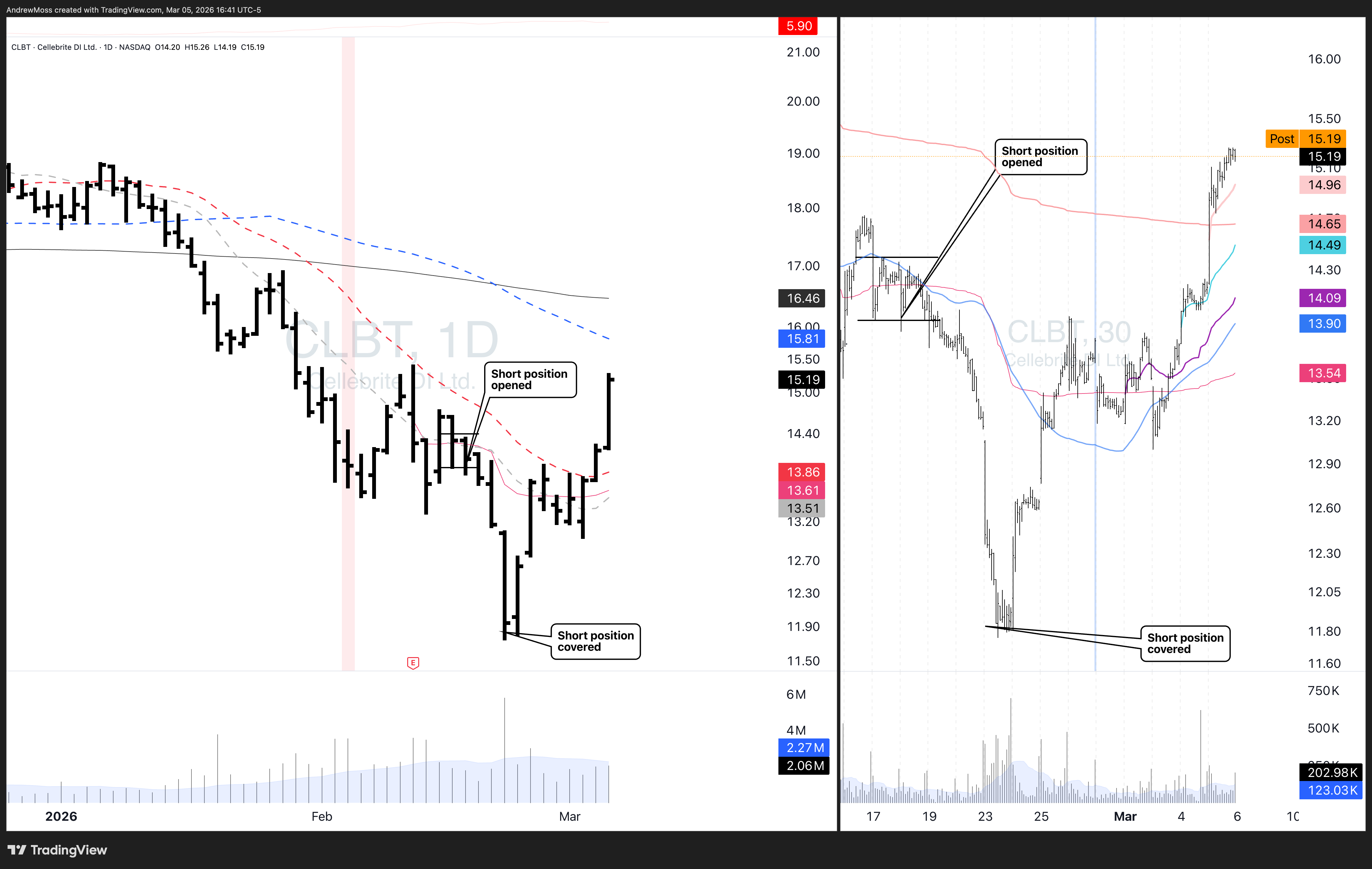
Inside Alphatrends over the past several weeks, we have taken both long and short trades when structure supported the setup. Recent examples have included long trades such as TOL and ULTA (highlighted here We Don’t Get Paid Just for Being Involved), along with several short opportunities—such as this one from Brian Shannon in CLBT, where the position was entered near $13.92 and covered near $11.83.
The chart below shows the move. Notice how quickly the stock rebounded after the decline. Without a defined exit plan, it would have been easy to give back a large portion of that gain while waiting for “just a little more” downside.
A structured approach to both entry and exit is what converts a good setup into a realized result.
Context is key.
Position sizes have generally been smaller than in a normal trending market. Selectivity has been higher.
That adjustment is not about fear.
It is about respecting the environment.
When markets trend and follow-through improves, exposure can expand.
When conditions become rotational and unpredictable, the priority shifts toward capital preservation and disciplined execution.
Process Over Impulse
Trading success rarely comes from forcing opportunity.
It comes from aligning risk with structure and letting the market determine when to expand participation.
The sequence is always the same:
Structure defines the stop.
The stop defines the risk.
The risk determines the position size.
Everything else is simply execution.
Navigating Uncertain Markets
Success in environments like this comes from disciplined execution, not bigger opinions.
If you want to see exactly how Brian and I approach markets in real time—identifying opportunity, defining risk, and managing trades as they develop—Alphatrends is where that process unfolds every day.
Inside Alphatrends we focus on:
Market structure and key levels
Real trade setups on both the long and short side
Position sizing and risk management
If that kind of structured approach resonates with you, you can learn more here:

Important: This content is provided for educational purposes only. If you’re reading this online, please review the full disclosure here.